The Signature I Taught Him to Read
Chapter 1 — The Laugh
The moment my son laughed in court, I knew he had forgotten who taught him how to recognize a lie.
Sheldon leaned toward his wife and whispered, loud enough for the gallery to hear, “Ha — now we’re going to leave her with nothing.” Blanche covered her mouth, pretending embarrassment, but her eyes shone with victory.
I walked past them in my plain navy coat, carrying no handbag, no lawyer, and no expression they could read.
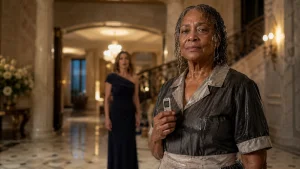
At seventy-one, with silver hair and a cane I only needed on stairs, I looked exactly like the helpless widow they had described in their petition.
Confused.
Frail.
Financially incompetent.
I want to tell you, before I tell you anything else, that the hardest part of that morning was not the humiliation.
I had been underestimated by cleverer men than my son, in higher-stakes rooms than that one, and I had learned long ago that being underestimated is a gift you accept quietly and use later.
No — the hardest part was the laugh itself.
Because I knew that laugh.
I had heard it when Sheldon was four and thought he had gotten away with something, and again at nine, and at fifteen, that same delighted, slightly cruel little sound he made when he believed he had outsmarted the world.
I had spent his whole childhood trying to teach him that the sound was a warning, not a triumph — that the moment you laugh at someone you think you’ve beaten is the moment you stop watching them, and the moment you stop watching is the moment you lose.