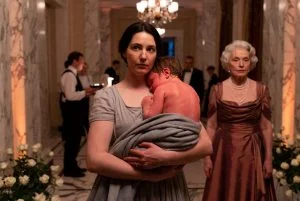
The Woman at the Head of the Table
I was in labor with an eleven-pound baby, but my husband—the celebrated chief of obstetrics—refused the C-section and forced a natural delivery, convinced I’d mistreated his adoring intern.
He nearly killed me to prove a point. He had no idea I’d walked into that room already recording, or that by the time I walked out, I’d have everything I needed to end him.
Chapter 1: The Butcher’s Block
The sterile bite of antiseptic clashed with the copper stench of my own blood, driving a spike of nausea straight into my sinuses. Above me, the operating lights beat down so hard the edges of my vision rippled into shadow.
The labor pains had stopped being contractions. They were a runaway freight train, pulverizing my pelvis with every cycle.
An eleven-pound infant was wedged immovably in my birth canal, pinching nerves and strangling blood vessels. The fetal heart monitor’s steady beeping had accelerated into a frantic alarm, the numbers bleeding toward the red line.
“Doctor Pierce, the mother’s vitals are crashing. The fetus is macrosomic. There’s a severe risk of cephalopelvic disproportion. I strongly advise an immediate emergency C-section.”
The assisting nurse’s voice cracked as she stared at the man at the head of my bed.
That man was my husband. Preston Pierce, the youngest, most celebrated chief of obstetrics on the Eastern Seaboard. He wore immaculate pale-blue scrubs, a surgical mask hiding everything but the narrow eyes I’d trusted for seven years.
In this moment, those eyes held none of their old warmth—only a condescending frost laced with impatience.
“Spare me the theatrics,” Preston said, his voice slicing through the mechanical panic of the room. “Her pelvic parameters meet the criteria. Natural birth optimizes fetal cardiopulmonary function.
You’d think weaponizing her medical degree to play the martyr would be beneath her.”
I bit into my lower lip until the metallic tang of blood filled my mouth. Cold sweat pasted the thin gown to my skin. I was Elena Vance, chief of emergency medicine at a Level-One trauma center, and I understood the failure cascade my body was enduring better than anyone breathing in this room.