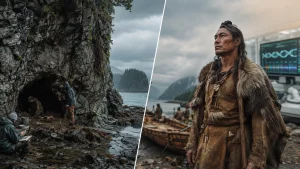
Ancient Skeletons In Brazil Carried A Genetic Signal Scientists Did Not Expect — And It Complicated The Story Of The First Americans
The Beringian standstill model, combined with the deep ancestral structure explanation of Population Y, suggests a specific picture of the founding of the Americas: a genetically diverse founding population, formed in Beringia from the coming together of multiple Asian source populations with different ancestry proportions, isolated long enough to develop additional internal diversity, and then dispersing into the Americas in ways that distributed different founding lineages differently across the continent.
This is not a simple story.
It is also not an implausible one, and the available genetic evidence is broadly consistent with it.
The challenge is that it requires data from Beringian ancient genomes — data that, for geographic and preservation reasons, is very difficult to obtain — to test directly.
The Role of the Amazon Basin
The Amazon Basin is one of the regions where the Population Y signal has been found with some consistency in genetic studies of living Indigenous populations, and the specific demographic and ecological history of Amazonian populations is relevant to understanding why this might be.
The Amazon Basin contains one of the highest densities of Indigenous linguistic and cultural diversity in the world — hundreds of distinct languages representing multiple unrelated language families, associated with communities that have maintained distinct identities and distinct subsistence practices for thousands of years.