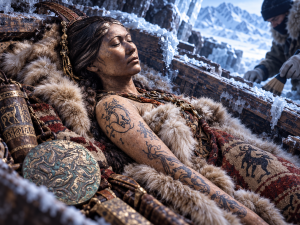
Archaeologists Baffled By A 2,000-Year-Old Skeleton Found In Scotland With Its Brain Scooped Out And Its Bones Turned Into Tools
At a broader level, it contributes to the ongoing revision of the understanding of Iron Age British funerary practice.
The field has moved substantially in the past two decades away from the view that Iron Age people in Britain simply buried their dead without complex ritual, and toward a recognition that the treatment of the dead was diverse, regionally variable, and often more elaborate than the physical record suggests.
The Loch Borralie evidence is a vivid illustration of this revised understanding.
The evidence for long-distance social networks in the Iron Age north of Scotland, generated by the DNA analysis, contributes to an emerging picture of prehistoric British society as more mobile, more connected, and more socially complex than older models allowed.