BUFFALO CALF ROAD WOMAN
The major shift came in the second half of the twentieth century, as the Native American civil rights movement of the 1960s and 1970s produced a generation of scholars — both Native and non-Native — who were committed to decolonizing American historical practice.
These scholars argued, with increasing success, that Native oral traditions were legitimate historical sources that deserved the same methodological rigor and respect given to any other form of historical evidence.
For the Battle of the Little Bighorn specifically, this shift produced a wealth of new scholarship.
Researchers who could access Northern Cheyenne, Lakota, and Arapaho community archives, who could conduct oral history interviews with elders, who could read the existing ethnographic literature with new eyes — these researchers began to assemble a picture of the battle that was substantially richer than what the military records alone could provide.
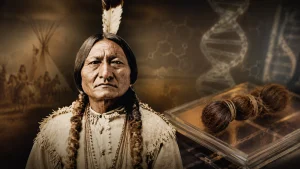
Buffalo Calf Road Woman emerged more clearly in this scholarship.
Her role at the Rosebud, which had been documented even in some Army-adjacent sources (the Crow scout testimony), received more sustained attention.
Her presence at Little Bighorn, preserved in Northern Cheyenne oral tradition, was taken more seriously as historical evidence.
The 2005 public sharing of Northern Cheyenne oral tradition regarding her role at the Little Bighorn — including the specific claim about striking Custer — generated a wave of popular and scholarly attention.
Some researchers received this tradition with appropriate historical caution, noting the difficulty of corroborating specific claims about chaotic battles while taking seriously the broader tradition of her participation.
Others engaged with it enthusiastically in ways that sometimes outran the evidence.