No More Phantom Keys
“I’ll give this to your father,” I said.
She nodded, turning away. “Thank you.”
She didn’t ask to come in. She didn’t expect to. She walked down the driveway, her posture a little more upright than when she’d arrived.
I closed the door and slid the heavy deadbolt into place.
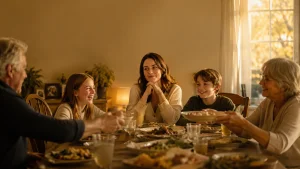
That evening I made dinner. Not boiled eggs and dry toast — rich, decadent carbonara, heavy cream, thick-cut pancetta, mountains of parmesan. The kitchen smelled of garlic and warmth.
Robert came downstairs, drawn by the scent. He saw the white envelope on the counter by the stove. I told him what happened. He opened it, stared at the money order, then folded it slowly and put it in his pocket, a complicated mix of sorrow and pride washing over his face.
He crossed the room and wrapped his arms around my waist, resting his chin on my shoulder as I stirred the pasta.
“No more phantom keys,” I whispered into the steam.
“No more,” Robert promised, and kissed the side of my head.
Our home was no longer just a structure of wood and stone, vulnerable to the whims of entitled invaders. It was a fortress we’d finally learned to defend together — protected not just by heavy deadbolts and brass pins, but by the hardest word to say, and the most vital one to mean.
No.
THE END.