One Queen. Up to 10 Million Eggs a Year. Inside the Hidden Empire of a Termite Colony
Without the queen, the colony loses its main source of new termites.
Without the workers, the queen and eggs could not survive.
Together, they create one of nature’s most organized hidden societies.
A Secret World Inside Walls and Soil
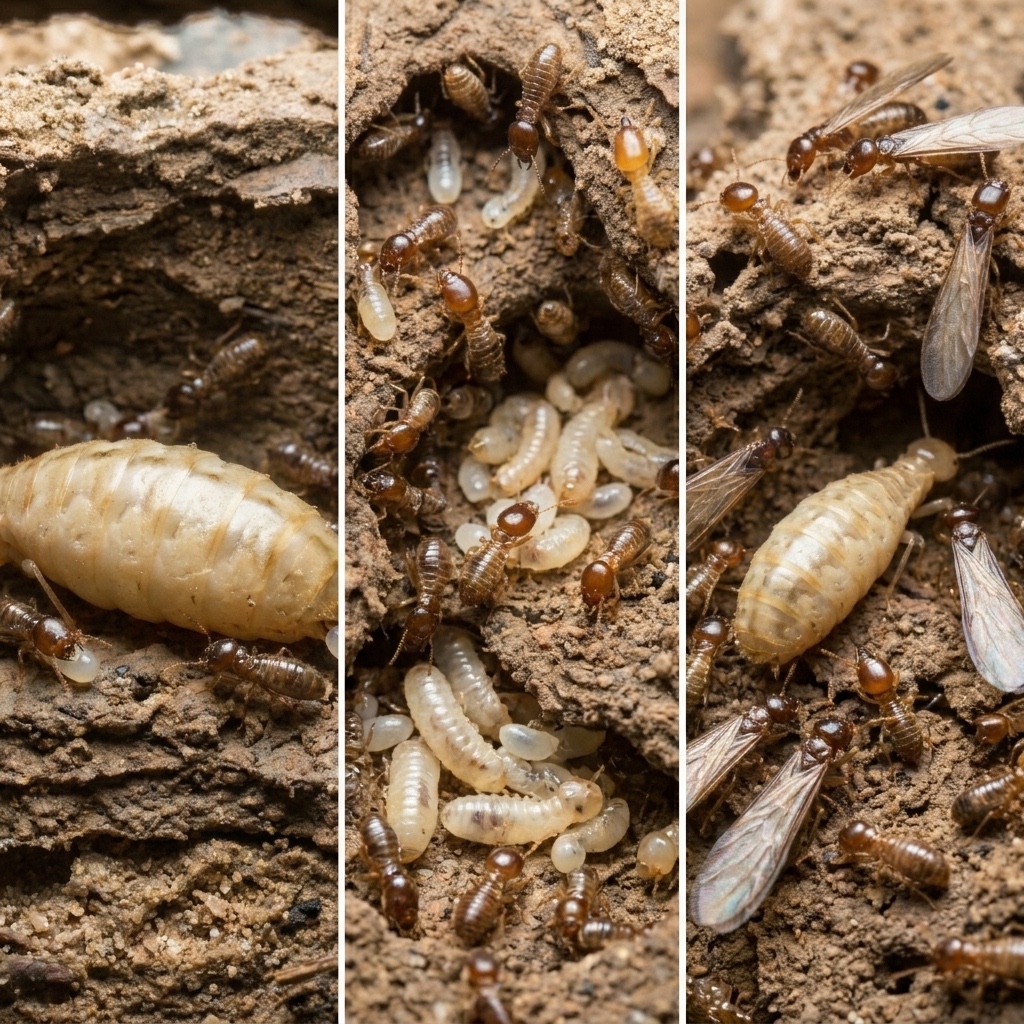
Termites are famous because they can damage wood, homes, and buildings, but their real world is usually hidden from sight. Many termite colonies live inside soil, wood, or underground tunnels. Some build large mounds. Others create hidden pathways behind walls, under floors, or inside wooden structures.
That is why people often do not notice termites until the damage has already started.
From the outside, everything may look normal.
A wall may look clean.
A floor may look strong.
A wooden beam may look untouched.
But inside, termites may already be building tunnels, feeding, and expanding their colony.
The queen stays protected in a special chamber, while workers travel through the nest collecting food and caring for the young. This hidden lifestyle is one reason termites are so successful.
The Queen Is Not Alone
A termite colony is not just a random group of insects. It is a highly organized system with different roles.
There are usually:
The queen — the main egg layer and center of reproduction.
The king — remains with the queen and helps reproduce.
Workers — feed the colony, build tunnels, care for eggs, and maintain the nest.
Soldiers — defend the colony from enemies, especially ants.
Winged termites — future kings and queens that leave to start new colonies.
Each termite has a role, and the colony survives because every role works together.