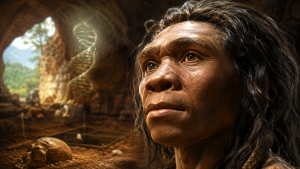
Shanidar Z — The 75,000-Year-Old Neanderthal Woman Whose Crushed Skull Was Rebuilt From More Than 200 Pieces
Genetically, the Neanderthals at Shanidar were not identical to their cousins in western Europe.
Ancient DNA work on Neanderthal genomes from different parts of their range has shown regional population structure — groups that were broadly related but carried distinct genetic signatures, reflecting their geography and their history.
The Altai Neanderthal from Siberia, the Vindija Neanderthals from Croatia, and the specimens from the Caucasus and the Levant all contribute to a complex picture of a species that was not monolithic but regionally differentiated, with populations that had periods of contact and periods of separation.
Behaviorally, Neanderthals at the eastern edge of their range were in contact — or at least in the same general region — with anatomically modern humans who were moving out of Africa and into the Levant and beyond.