She Has Been Dead For 45,000 Years. In 2026, Three Different Scientists Gave Her Three Different Faces — And Each One Revealed Something The Others Missed
This was the clock that dated Zlatý kůň — and what that clock revealed was astonishing.
The Genome That Rewrote the Timeline
In 2021, a team led by Kay Prüfer at the Max Planck Institute for Evolutionary Anthropology published the results of genomic analysis on the Zlatý kůň skull in the journal Nature Ecology & Evolution.
The findings were immediately recognized as scientifically significant.
The Neanderthal DNA segments in Zlatý kůň’s genome were unusually long.
Longer than those found in the Bacho Kiro individuals — the previously oldest known genomes of anatomically modern humans in Europe, dating to roughly 44,000 to 46,000 years ago.
Longer, in fact, than in almost any other ancient human genome that had been sequenced.
You Might Also Like

When My Ex-Husband Brought His Young Mistress to Our Son’s Pool Party to Humiliate Me, I Introduced Everyone to My Handsome New “Boyfriend” — He Laughed and Called It Pathetic, Certain I’d Hired an Actor, Until the Man Opened a Small Case and Said One Sentence That Drained the Color From His Face
Daily Gossips

The Strongest Flowers Survive the Cold
Daily Gossips
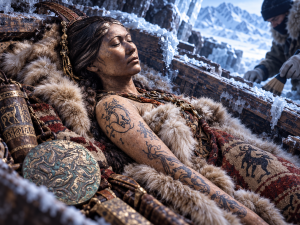
The 2,500-Year-Old Frozen Woman Found In Siberia — And The Secrets Hidden Inside The Ice Maiden’s Tomb
Daily Gossips

The Key She Sewed Into Her Dress
Daily Gossips