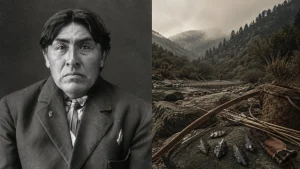
The 10,300-Year-Old Man Found Inside An Alaskan Island Cave — And The DNA Test That Revealed 10,000 Years Of Native Coastal Continuity
The consultation between researchers and community representatives, the naming of the ancient individual, and the ongoing relationship between the scientific investigation and the Indigenous communities affected by it were all part of a process that attempted — however imperfectly — to recognize that these remains were not simply scientific data but ancestral human material with living community significance.
The World He Lived In: A Coast in Transformation
To understand who Shuká Káa was and what his life might have looked like — to the extent that such understanding is possible from the available evidence — it is necessary to understand the specific environment of the Southeast Alaskan coast 10,300 years ago, which was in important ways different from the environment of today.
The world of 10,300 years ago was the early Holocene — the geological epoch that followed the end of the last Ice Age and that we are still living in.