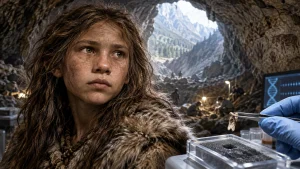
The 10,600-Year-Old Man Found In Nevada — And The DNA Discovery That Changed The Story Of The First Americans
If the earliest Americans were not the ancestors of modern Native peoples, it would potentially undermine the legal and moral basis for Native American claims to the oldest archaeological sites and ancient remains in North America.
If the first Americans had been a different group who were subsequently displaced, then living Native American communities could not claim the same deep-rooted historical connection to the land that had long been the foundation of Indigenous rights arguments.
The Paleoamerican hypothesis was never the scientific consensus.
Many researchers found its evidentiary basis unconvincing, and the underlying morphological analysis on which it rested was questioned on methodological grounds.
The variation in skull shape between early and late American populations could be explained by many factors — natural within-population variation, adaptation to different environments, dietary differences that affected skull development, genetic drift within small founding populations — without requiring the existence of a separate founding group.