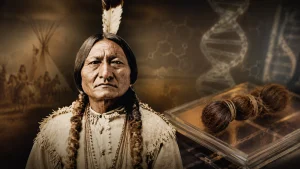
The 10,600-Year-Old Man Found In Nevada — And The DNA Discovery That Changed The Story Of The First Americans
The Fallon Paiute-Shoshone Tribe’s relationship with the Spirit Cave Man was not simply a legal dispute about ancient remains.
It was an expression of a deep and ongoing connection to a specific landscape — a connection that the Tribe maintained through oral tradition, ceremonial practice, and an understanding of their own history that did not depend on Western scientific validation to be meaningful.
The Tribe called the ancient individual from Spirit Cave the Storyteller.
This name reflected their understanding of him as someone whose presence spoke to the deep history of their people in this landscape — not a specimen or a data point, but a relative, an ancestor in the broad sense that Indigenous communities often use the term, encompassing connections that are more than narrowly genealogical.
For years, the Tribe watched as their legal requests for repatriation were denied, as scientists debated the meaning of the burial’s skull morphology, as the Paleoamerican hypothesis gained public attention, and as the implicit message of that debate — that the ancient man might not be related to them at all — was circulated in scientific journals and popular media.