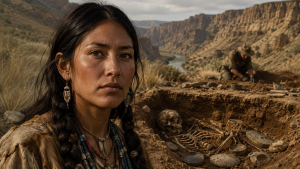
The 10,600-Year-Old Man Found In Nevada — And The DNA Discovery That Changed The Story Of The First Americans
The study compared the Spirit Cave Man’s genome — from northwestern Nevada, approximately 10,600 years ago — with ancient genomes from South America dating to roughly the same period.
The genetic similarities between these geographically distant ancient individuals suggested that the founding population had spread from Alaska to the southern tip of South America with extraordinary speed — potentially within a few thousand years of the initial entry from Beringia.
This speed was consistent with a model in which early Americans were highly mobile hunter-gatherers who moved rapidly across landscapes rich in large game animals that had never encountered human hunters before — and that were, as a result, naive to human predation and relatively easy to hunt.
The extinction of the Pleistocene megafauna — the mammoths, mastodons, giant ground sloths, and other large animals that disappeared from the Americas within a few thousand years of human arrival — has long been debated, and hunting pressure is one of the proposed explanations.