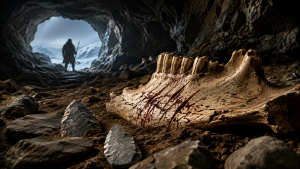
The 13,000-Year-Old Clovis Child Found With Ancient Weapons — And The Burial That Changed America’s First People Story
Their thick, shaggy coats were adapted to the cold conditions of the mammoth steppe.
Their tusks could reach several meters in length.
They were social animals that lived in matriarchal family groups, with younger animals learning behavioral patterns from older relatives — a social structure that has both ecological and hunting implications.
From an ecological standpoint, a single adult mammoth represented a massive resource: hundreds of kilograms of meat and fat, a thick hide potentially useful for shelter and clothing, ivory tusks that could be worked into tools and ceremonial objects, and a range of organs and marrow that provided essential nutrients in a diet limited by the cold climate’s constraints on plant availability.
From a hunting standpoint, a mammoth was an extraordinarily dangerous animal to approach, let alone kill.