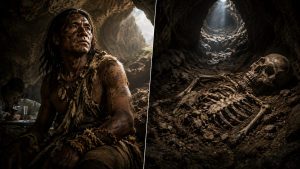
The 13,000-Year-Old Clovis Child Found With Ancient Weapons — And The Burial That Changed America’s First People Story
The proposed standstill period, estimated at roughly 10,000 to 15,000 years based on genetic models, would have produced the genetic distinctiveness of Native American populations relative to their closest Asian relatives.
The Anzick genome provides additional evidence relevant to this hypothesis.
The specific genetic profile of the Anzick child — its affinities with Asian populations and its distinctiveness from those populations — is consistent with the model in which an ancestral Native American population was isolated in Beringia for an extended period before entering the Americas.
The genome does not directly date the standstill or precisely characterize its nature, but it is consistent with the standstill model and inconsistent with models that propose either a very recent divergence from Asian populations or multiple independent migrations from very different Asian source populations.
The Clovis culture itself, in this framework, represents the technology developed by or adapted by the people who had spent their standstill period in Beringia and who were now moving rapidly through the Americas as climate change opened new territories to exploitation.