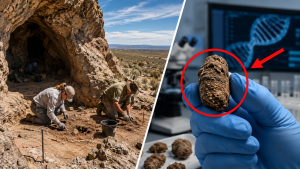
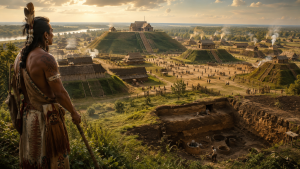
The 13,000-Year-Old Clovis Child Found With Ancient Weapons — And The Burial That Changed America’s First People Story
Not necessarily a specific, doctrinally defined afterlife, but at minimum the sense that death does not fully end the person, that something of the deceased person is present in the remains and deserves treatment appropriate to a person rather than merely to organic matter.
Burial implies social relationships that persist beyond death — the obligation of the living to the dead, the expression of grief through action, the communication to the wider community of the value placed on the deceased.
Burial implies symbolic capacity — the use of pigments, of specific objects, of spatial arrangements — to communicate meanings that go beyond the immediately practical.
The red ochre at Anzick was not there because it served any practical purpose for the child’s remains.
It was there because it meant something to the people who applied it — something about death, about blood, about life, about the transition from one state to another.