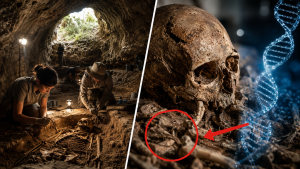
The 24,000-Year-Old Bones Found In A Yukon Cave — And The Cut Marks That Pushed Humans In North America Farther Back In Time
The person watching those horses, or processing the remains of a horse that had been killed or scavenged, was a modern human being.
As fully human as any person alive today.
As intelligent, as capable of abstract thought, as capable of language and social relationship and cultural complexity.
And what they were doing — what the marks on the horse’s jaw attest — was exactly what any competent hunter-gatherer in any cold-climate environment would do: extracting the maximum possible resources from a large animal in an environment where resources were valuable and waste was dangerous.
The marks they left on that bone, frozen into the sediment by the permafrost of the Yukon, waited 24,000 years for someone to look at them carefully enough to understand what they meant.