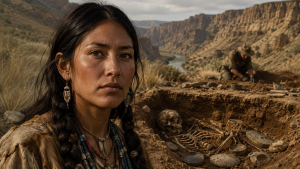
The 24,000-Year-Old Boy Buried Beneath A Stone Slab With 120 Beads And Mammoth-Ivory Jewelry — And The DNA Test That Revealed A Hidden Source Of Native American Ancestry
Not a king, not a religious leader, not an elder who had accumulated status over a lifetime.
A child of three or four years, who had not yet had the opportunity to distinguish himself by any of the usual measures of adult achievement.
This tells us something specific about how status worked in the Mal’ta community — or at least about this particular burial.
The investment in the child’s grave goods suggests either that the child himself had some form of hereditary status, perhaps derived from high-status parents or a high-status family line, or that the community’s values around childhood death specifically motivated elaborate burial treatment.
Either interpretation is consistent with a fully human community operating with a complex, culturally mediated understanding of value, identity, and loss.