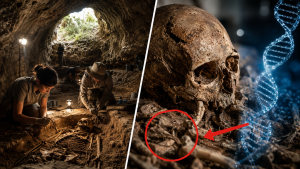
The 24,000-Year-Old Boy Buried Beneath A Stone Slab With 120 Beads And Mammoth-Ivory Jewelry — And The DNA Test That Revealed A Hidden Source Of Native American Ancestry
These models had been developed through the analysis of modern Native American mitochondrial DNA, Y-chromosome variation, and eventually genome-wide data, and they had been reasonably well supported by the available evidence.
The challenge posed by the Mal’ta genome was that it revealed a genetic component in Native American ancestry that did not fit cleanly into the East Asian model.
The Ancient North Eurasian ancestry, while detectable in the statistical analysis of modern Native American genomes, had not been clearly attributed to a source population.
The Mal’ta genome provided that source population — or at least a representative of it — and allowed researchers to begin modeling the mixing event that had introduced this ancestry into the founding population of the Americas.
The subsequent debate has focused on several questions.