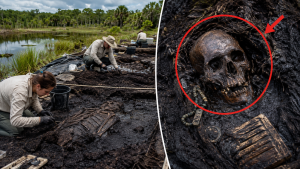
The 24,000-Year-Old Boy Buried Beneath A Stone Slab With 120 Beads And Mammoth-Ivory Jewelry — And The DNA Test That Revealed A Hidden Source Of Native American Ancestry
The genetic connection between the Mal’ta boy and the ancestors of Native Americans has implications that reach from the laboratory into the living present.
It is important to state clearly what those implications are and are not.
The genome of the Mal’ta boy does not tell us anything specific about the cultural traditions, the languages, the spiritual practices, or the social organization of any modern Native American nation or community.
Genetics and culture are not the same thing.
The Indigenous peoples of the Americas have developed their specific cultural identities — their particular languages, their ceremonial traditions, their forms of political organization, their relationships to specific landscapes — over thousands of years of history that involves far more than the genetic ancestry of their founding populations.
A Cherokee person’s connection to the Mal’ta boy’s genome is a matter of deep ancestral biology — a thread of inherited genetic material that connects, through many intermediate generations, the child buried in Siberia to the contemporary communities of the American Southeast.