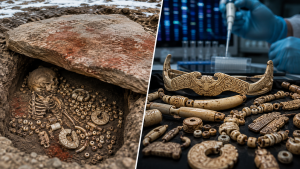
The 4,500-Year-Old Egyptian Man Found In A Tomb — And The DNA Test That Revealed His Unexpected Ancestry
This is consistent with the broader picture of human population history in the ancient Near East and North Africa, which is characterized by millennia of contact, exchange, and movement.
The agricultural transition that spread farming from its origins in the Fertile Crescent into North Africa and Europe was accompanied by genuine movement of people — not just the movement of ideas and techniques, but of farmers who carried the genetic heritage of the Fertile Crescent into new territories.
In North Africa, as elsewhere, the arrival of farmers during the Neolithic period introduced Near Eastern-related ancestry into existing forager populations.
The Fertile Crescent ancestry in NUE001 may partly reflect this older Neolithic introduction of farming-related ancestry, and partly reflect more recent contacts during the proto-Dynastic and Early Dynastic periods — the period of archaeological evidence for connections between Mesopotamia and Egypt in the late fourth and early third millennia BCE.