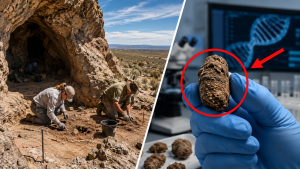
The 4,500-Year-Old Egyptian Man Found In A Tomb — And The DNA Test That Revealed His Unexpected Ancestry
The rock-cut tomb — a burial cut into the face of a cliff — was a form used across a range of social levels in ancient Egypt, from modest to relatively prosperous.
The ceramic vessel in which he was buried was a common funerary practice for non-elite individuals.
He was not destitute, but he was not powerful.
What preserved his DNA while that of so many other ancient Egyptians was lost?
The researchers believe the answer lies partly in the specific conditions of his burial.
The rock-cut tomb, cut into the hillside, may have provided a more stable thermal environment than exposed desert sites — limiting the temperature fluctuations that accelerate DNA degradation.
His burial within the ceramic vessel may have provided additional protection, creating a small enclosed environment with more stable humidity and temperature.