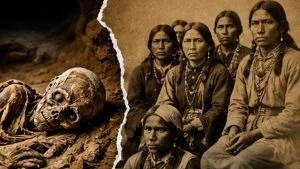
The 6,000-Year-Old People Found Near Bogotá — And The DNA Test That Revealed A Native American Lineage That Vanished From The Genetic Record
They sit in a position that the researchers describe as a previously unknown basal lineage, distinct from other ancient South American populations, with no detectable contribution to the later peoples of the same region.
This is simultaneously a clear scientific result and a source of new questions.
The clearest of those new questions is: what happened in the four thousand years between when the Checua people are last visible in the genetic record and when the Central American-related ancestry appears as the new dominant profile on the plateau?
The answer to that question is not in the 2025 paper.
It is in the ground — in the bones of people who lived on the Bogotá Altiplano between 6,000 and 2,000 years before present, in sites that may or may not have been identified, in remains that may or may not have preserved enough biological material for ancient DNA extraction.