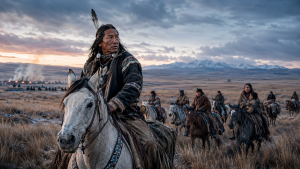
The 64 Maya Boys Buried Beneath Chichén Itzá — And The DNA Test That Found Two Pairs Of Identical Twins
Written down in the K’iche’ Maya language using the Latin alphabet in the sixteenth century, it records a complex creation narrative that incorporates earlier oral and possibly written traditions.
The text describes the creation of the world, the deeds of supernatural beings, the descent of the Hero Twins into the underworld, and the eventual creation of human beings.
The Hero Twins — Hunahpu and Xbalanque — are at the center of one of the narrative’s most extended sequences.
They are the sons of a supernatural figure whose head is preserved in a gourd tree and who impregnates a woman in the underworld through the action of spitting on her hand.
Born of this unusual parentage, the twins grow up to be ballplayers — a significant detail, given the importance of the ball game in Maya culture — and are eventually summoned to the underworld by its lords, who have been disturbed by the noise of the twins’ play.