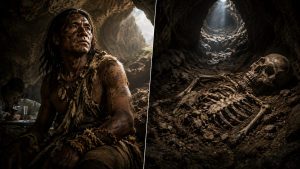
The 8,000-Year-Old Cemetery Found Beneath A Florida Pond — And The Human Brain Tissue Still Preserved Inside The Skulls
The woven fabric survived.
The bone and antler tools survived.
The gut contents of some individuals survived.
In some of the skulls, intracranial tissue survived — compressed and altered by thousands of years in the peat, but structurally recognizable, chemically analyzable, biologically coherent enough to yield what was, in 1986, the most ancient human DNA ever detected.
The significance of Windover is not the shock of preserved brain tissue.
That shock was real, and the science it enabled was important.