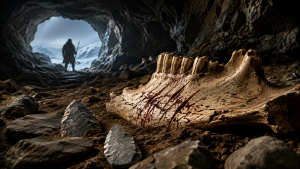
The 8,500-Year-Old Skeletons Found In A Texas Cave — And The Ancient DNA Mystery Hidden Inside
When the remains were reburied under the authority of the Lipan Apache Band of Texas, archaeologists noted in print that Apache speakers — who speak an Athapascan language whose ancestors almost certainly entered the southwestern United States much later than 8,500 years ago — are not plausibly the biological or cultural descendants of the Buckeye Knoll people.
The cultural affiliation determination was driven by geographic proximity and legal default, not by demonstrable ancestry.
The scientific loss was real.
The remains that had already been studied were analyzed, but the study was not complete.
Questions that might have been answered through additional analysis — particularly through ancient DNA analysis — cannot now be answered from the Buckeye Knoll physical collection.
At the same time, the principle underlying the reburial — that Indigenous peoples have the right to determine the fate of the ancestors of the human communities that inhabited these lands before European arrival, even when specific descent cannot be demonstrated — is a principle that reflects genuine moral weight.