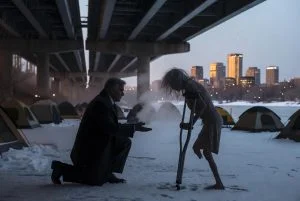
The Ancient Girl Whose DNA Revealed Her Parents Were Two Different Human Species
It showed the characteristic coloring of bone that has spent a very long time in the ground.
Nothing about its external appearance distinguished it from thousands of other fragments.
The initial protein analysis that flagged it as hominin was part of a systematic screening program — researchers were testing bone fragments from Denisova Cave in bulk, using a relatively inexpensive method called zooarchaeology by mass spectrometry, or ZooMS, to quickly identify which fragments were potentially from hominins and therefore worth the much more expensive and time-consuming process of DNA analysis.
The ZooMS result put Denisova 11 on the priority list.