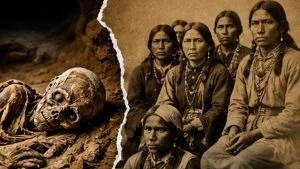
THE ANCIENT MAN BESIDE THE RIVER
The scientists could not study the remains.
The tribes could not bury them.
And the man who had died beside the Columbia River eight thousand years ago waited, in a padlocked steel cabinet at the Army Corps of Engineers’ facility in Walla Walla, Washington, for someone to decide what to do with him.
SECTION 8: THE LEGAL BATTLE — NINE YEARS IN THE COURTS
The lawsuit — formally titled Bonnichsen et al. v.
United States — moved through the federal court system with the grinding slowness that characterizes legal proceedings of genuine complexity and consequence.
The core legal question was deceptively simple: did NAGPRA apply to remains this old?
NAGPRA’s language required a demonstrable “cultural affiliation” between ancient remains and a present-day tribal group.
The law was written with historical remains in mind — items and bodies from a few hundred years ago, close enough in time that connections to living communities could be established through documentation, oral history, and cultural continuity.
But Kennewick Man was 8,400 years old.