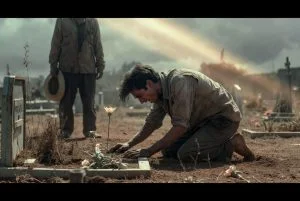
THE ANCIENT MAN BESIDE THE RIVER
He revealed the limits of what skull measurements can tell us about human identity.
He demonstrated, through the century of conflict his discovery provoked, how deeply the wounds of colonization still run in the relationship between Native communities and the institutions of the American state.
And he carried, in his ancient DNA, a truth that his descendants had always known: that this land was theirs.
That their connection to it was not a recent thing, not a matter of a few centuries, but a bond written in the deepest geological record of this place — in the bones of a man who had walked here when the world was eight thousand years younger.
The tribes of the Columbia Plateau have a word for this kind of deep, unbreakable connection to a place.
It doesn’t translate perfectly into English.
But its meaning is something like: we have always been here.
The ancient man in the river knew this.
His bones remembered it for eight thousand years.
His DNA proved it.