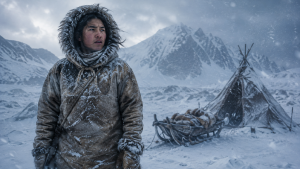
THE ANCIENT MAN BESIDE THE RIVER
They did not have written records from nine thousand years ago, because writing had not been invented nine thousand years ago.
They had story, ceremony, language, ecological knowledge, and an unbroken human presence in the landscape.
Western institutions — courts, scientific organizations, government agencies — initially treated this oral traditional evidence as insufficient to establish the ancestral connection that NAGPRA required.
The legal ruling that kept Kennewick Man from the tribes for nearly two decades was built, in part, on the premise that oral tradition alone was not enough.
Then the ancient DNA study was published.
And the oral tradition was confirmed.
This does not mean that every specific claim in every oral tradition is literally historically accurate.
Oral traditions are complex narrative systems that encode historical, ecological, spiritual, and social knowledge in forms that are designed to be memorable and transmissible across generations, not to serve as verbatim historical transcripts.
Some elements of oral traditions are clearly metaphorical or mythological, encoding truths about the human condition rather than specific historical events.
But the core historical claim of the Columbia Plateau tribes — that their people have been present in this region for a very long time, that the ancient dead found in this landscape are their ancestors — turned out to be supported by the most rigorous scientific methodology available.