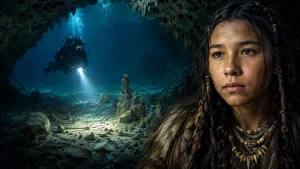
The Ancient Native American Found 2.5 Miles Inside Mammoth Cave — And The Mystery Of Why His People Went So Deep Underground
The Green River flows through Mammoth Cave National Park roughly a mile south of the Historic Entrance.
It is not a dramatic river by the standards of the American landscape — not the Mississippi or the Ohio, not wide or deep, but a clear, winding river cutting through limestone hills that have been shaped over millions of years by exactly the kind of dissolution that produces caves.
Water is the architect of Mammoth Cave.
Rainwater absorbs carbon dioxide from the atmosphere and the soil and becomes a weak carbonic acid — dilute enough that it doesn’t harm human skin, concentrated enough that over millions of years it dissolves limestone.
That slightly acidic water percolates through fractures and bedding planes in the limestone bedrock, carrying away the calcium carbonate in solution, gradually widening the fractures into passages.