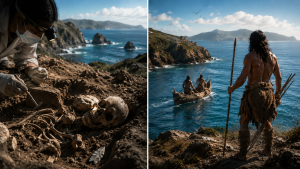
The Ancient Native American Found 2.5 Miles Inside Mammoth Cave — And The Mystery Of Why His People Went So Deep Underground
The same principle preserves the cave’s fine sediment — the silt and clay that settled on the cave floor when the passages were active waterways millions of years ago, and that has been undisturbed since.
The footprints that ancient miners left in that sediment are intact because nothing has moved the sediment since the footprints were made.
No rain, no wind, no burrowing animals, no human feet for two thousand years.
For archaeologists, this creates conditions that are nearly impossible to find outside of specially protected sites or unusually dry climates.
Comparable preservation exists in the driest desert environments — the Atacama, the Egyptian Valley of the Kings — but those environments are rare and are not commonly associated with the intensive human use that Mammoth Cave represents.
The combination of extraordinary preservation and extensive human use across thousands of years is what makes Mammoth Cave’s archaeological record genuinely without parallel in North American archaeology.