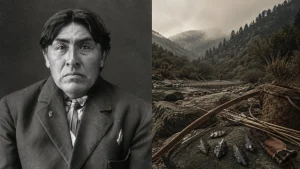
The Cherokee Mathematician Who Helped Design America’s Space Age – While Much Of Her Work Remained Secret
What Mary Ross navigated was something more thorough than that.
It was the invisibility that comes from working inside systems whose organizing assumptions make you impossible to perceive clearly.
The aerospace engineering world of the 1950s was built on a set of assumptions about who engineers were.
They were men.
They were, in the American context, almost entirely white.
The tools for evaluating, recognizing, and rewarding engineers — the organizational hierarchies, the attribution practices, the promotional pathways, the social networks — were built around those assumptions.
When someone arrived who did not match the assumed profile, the mismatch between person and assumption created a kind of perceptual blur: the person was there, was working, was contributing, but the conceptual frameworks available for perceiving and describing what they were doing did not quite fit.