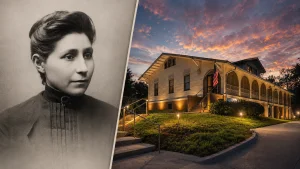
The Cherokee Mathematician Who Helped Design America’s Space Age – While Much Of Her Work Remained Secret
It addressed the specific mathematical problems of planning missions to other planets: the trajectory calculations, the launch window analysis, the performance requirements for launch vehicles, the conditions a spacecraft would encounter during the cruise phase of an interplanetary mission and during arrival at the target planet.
The mathematics involved was not simple.
Interplanetary trajectories are governed by orbital mechanics — the mathematical description of how objects move under the influence of gravity in the specific configuration of the solar system.
Computing them accurately required numerical methods that were, in the early 1960s, being implemented on the early generations of digital computers available to aerospace engineers.
The calculations were demanding enough that even with those computers, they required the attention of mathematicians who understood what they were computing and why.
The handbook translated those calculations into a reference format — a form in which an engineer planning a mission could look up the relevant parameters, apply the relevant methods, and arrive at the specific numbers needed for a specific mission profile.