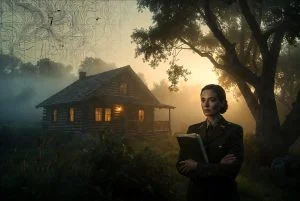
The Cherokee Mathematician Who Helped Design America’s Space Age – While Much Of Her Work Remained Secret
It is also, in a specific sense, informative.
It tells us about the conditions under which technically advanced work was done in the Cold War era — the secrecy, the institutional structures, the norms of attribution and recognition.
And it tells us that a Cherokee woman from Park Hill, Oklahoma, worked inside those conditions for thirty-one years and contributed to some of the most consequential technical work American engineers have ever done.
What the record asks of us is the same thing that any incomplete but significant record asks: to engage with it honestly, to be clear about what is documented and what is not, to resist the temptation to fill the gaps with what we wish were true rather than what can be established, and to treat the documented portion of her achievement with the respect it deserves without overstating what cannot be verified.