The Folder My Father Left
I had sat across tables from people who were very good at lying, and I had learned that the loudest person in a room is almost never the one you need to watch.
None of that was glamorous.
Most of it was patience and paperwork.
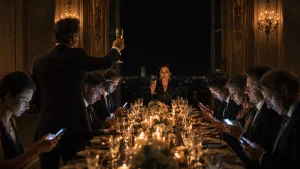
But it had taught me to recognize an ambush by its housekeeping — by the too-clean surfaces, the seating chosen in advance, the way the exits get quietly occupied — and my mother’s dining room, that evening, had been kept very clean indeed.
I want to be fair to the girl I had been, because the distance between me and that house did not open all at once.
When I was young I had wanted my mother’s approval the way you want water.
She was beautiful and quick and could make a room lean toward her, and when her attention landed on you it felt like weather clearing.
The trouble was that it landed only when you were useful to some story she was telling about herself, and I had spent a great many years failing to be that, and mistaking the failure for my own.
It was my father who taught me another way to measure a life.
He never raised his voice and never performed his love; he simply showed up, remembered the small things, and told the truth in a low, steady tone that made the truth sound survivable.
When I chose the Army over the wedding my mother had half-arranged, she treated it as a betrayal and a scandal.
My father drove me to the airport, and on the way he said only, Learn to stand on your own feet, and you’ll never have to sign anything you don’t mean. I did not know, then, how literal that advice would turn out to be.
Chapter 2 — The Room With Five Lawyers
I came in civilian clothes — black trousers, a white blouse, my hair pulled back.