The Letter in My Purse
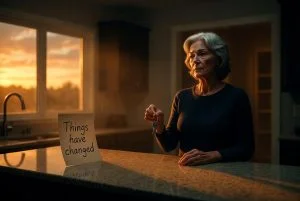
I am gentle with her now, that frightened woman at the stove, because I know where her story ends, and she did not.
She could not see, in that terrible first moment, that the worst night of her life was also the first night of her freedom, that the photograph burning a hole in her phone was not only a catastrophe but a rescue, arriving in disguise.
If I could reach back to her across those four days, I would tell her only one thing: that she was stronger than she had any idea, that the life waiting on the far side of the truth was better than the comfortable lie she was so afraid to lose, and that the small watchful boy upstairs was going to be just fine, and so was she.
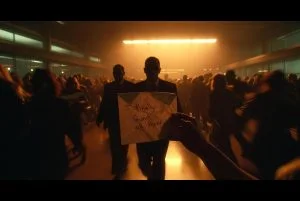
I have thought a great deal, since, about the difference between the woman who stood at that stove and the woman who walked out of that ballroom, and how only four days separated them.
People imagine that a life comes apart slowly, that there are warnings, a long visible decline you could have caught if only you had been paying attention.
Sometimes that is true.
But sometimes it comes apart all at once, in the space of a single photograph, and the strangest part is realizing afterward that the thing which shattered had already been broken for a long time, and you had simply been the last to be told.
The marriage I thought I was living in had not existed for years.
What broke that Tuesday was not the marriage.
It was only my belief in it.
And a belief, it turns out, can go on holding up the roof for a surprisingly long time after the walls have quietly rotted away underneath it.
Chapter 2 — A Photograph Through a Window
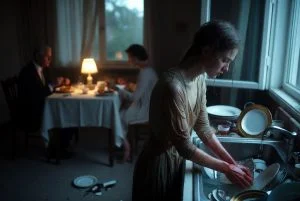
I was standing at the stove reheating leftover pasta for dinner, the radio on low, the last of the daylight going gray in the window over the sink, when my phone buzzed against the counter with a text from my friend Claudia.
It was a photograph.