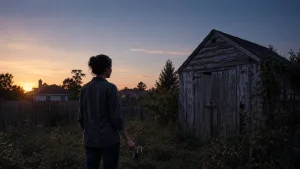
The Long Way Around
Chapter 1 — The New Man in Town
I moved to Coldwater in the fall, alone, at sixty-two, into a small house with a big yard and no one in it but me, and for the first six weeks the only conversations I had were with the checkout girl at the grocery and the recorded voice that answered when I called about my internet.
I had not planned to end up alone in a town I’d never heard of.
Nobody plans that.
But my wife had died four years earlier — I’ll get to Carol, or I won’t, we’ll see — and my job had ended the way jobs do now, in a conference room with a folder, and my daughter had a life two time zones away that did not have a spare room in it for a grieving father, and one day I looked around the city I’d lived in for thirty years and realized there was nothing holding me there but the memory of a life that was over.
So I put a pin in a map, more or less.
Coldwater was cheap and quiet and had trees, and I bought a house sight unseen off the internet like a fool, and I drove out with everything I still wanted in a rented trailer, and I arrived to a town of four thousand people every one of whom had known every other one since birth, and I understood within about a day that I had made either the smartest or the loneliest decision of my life, and that it was going to take me a while to find out which.
Those first six weeks taught me things about loneliness I had managed, somehow, not to learn in four years of it back in the city.
In the city loneliness had a kind of camouflage; there were people everywhere, crowds, noise, the constant low hum of other lives, and you could tell yourself you were part of something just by standing in the checkout line behind someone.
It was a lie, but it was a comfortable lie, and it got me through.
Coldwater stripped the lie away.
In a town that small, where everyone belonged to everyone, my not-belonging was total and visible and impossible to talk myself out of.
I’d go to the diner and eat alone at the counter while whole families and lifelong friends filled the booths behind me, laughing at jokes forty years in the making.
I’d nod at people on the sidewalk and they’d nod back, friendly enough, but with the particular pleasant blankness you give a stranger, and I’d go home to my big empty house and hear my own footsteps.
I had traded the crowd that let me pretend for a small town that would not let me pretend at all, and I lay awake more than one of those first nights wondering if I’d made a terrible mistake — if I’d fled a comfortable loneliness for a brutal honest one, and whether an honest loneliness was better or only worse.
I did not yet understand that Coldwater’s refusal to let me hide was going to be the saving of me.
A place that will not let you disappear is a place, it turns out, where you can finally be found.
Chapter 2 — The Hardware Store