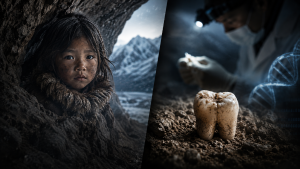
The Man Found In A Melting Glacier — And The DNA Test That Found 17 Living Relatives Centuries Later
People who have lived in salmon country for generations know these distinctions in detail: which species runs in which river, at what time of year, at what elevation, in what quantities.
This knowledge is not academic — it is the practical knowledge that survival in the salmon-rich environments of the Northwest Coast and subarctic interior requires.
For Kwäday Dän Ts’ìnchi, the salmon in his stomach was almost certainly preserved — dried or smoked — rather than fresh.
The time between eating fresh salmon and dying in the alpine terrain would have been days at minimum, and fresh salmon at altitude in the mountains in summer would be a logistical improbability.
Preserved salmon — dried strips or smoked pieces — is exactly the kind of travel food that the people of this region have always used for journeys: lightweight, calorie-dense, shelf-stable, and culturally central.