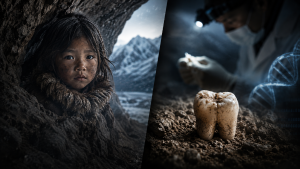
The Man Found In A Melting Glacier — And The DNA Test That Found 17 Living Relatives Centuries Later
It was the response of a community that recognized its own landscape, found an ancestor within it, and understood — through the specific frameworks of their governance and their cultural tradition — exactly what responsibilities that recognition entailed.
The landscape is still there.
The communities are still there.
The ice is still retreating.
And the relationship between the living communities and the landscape they govern — including whatever the retreating ice may reveal — continues.
The Connection That Crosses The Centuries
Return, at the end, to what the discovery of Kwäday Dän Ts’ìnchi actually established — not in the abstract language of population genetics or the technical vocabulary of radiocarbon dating and isotope analysis, but in the human terms that give those findings their significance.
A man traveled through the mountains of the Tatshenshini-Alsek region several centuries ago.