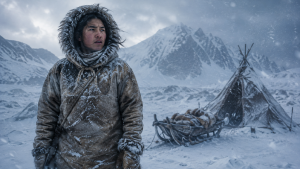
The Man Found In A Melting Glacier — And The DNA Test That Found 17 Living Relatives Centuries Later
Clan identity in living communities is not simply a matter of genetics — it involves ongoing participation in clan life, transmission of clan knowledge and responsibility, and the social acknowledgment of the community.
An ancient individual, however genetically connected to living clan members, cannot be straightforwardly assigned a clan identity on the basis of maternal-line DNA alone.
But the connection between the genetic finding and the matrilineal social organization of the region’s Indigenous peoples is culturally meaningful in a way that goes beyond what the bare genetics can capture.
The seventeen people whose DNA matched Kwäday Dän Ts’ìnchi are not just statistically related to him — they are, in the framework of their own social organization, recognizable as maternal-line relatives in the specific sense that their culture has always understood that term.
This is one of the places where Western scientific knowledge and Indigenous cultural knowledge converge in a way that is mutually illuminating rather than contradictory.