The Mystery Of Crazy Horse’s Final Resting Place — And The Search For The Lost Burial Site
The mythology includes the claim that he was never photographed — which may be accurate or may be a legend.
It includes accounts of his spiritual powers and his visions.
It includes the romantic image of the last free warrior, which is emotionally compelling but loses the specific, complicated historical person in the generalization.
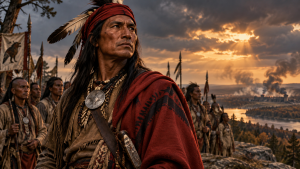
The historical person — Tȟašúŋke Witkó, born around 1840, member of the Oglala band of the Lakota, son of a medicine man, war leader who earned his position through demonstrated effectiveness rather than hereditary succession, man who was killed in a struggle at a guardhouse door at the age of approximately 37 — is more interesting than the mythology, and more worth understanding.
Grounding him in the historical record is a way of respecting him: treating him as a person rather than a symbol.