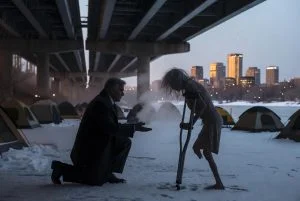
The Native Alaskan Survival Story That Revealed How Indigenous Knowledge Helped Humans Adapt To One Of Earth’s Harshest Environments
Iñupiat and other Arctic Indigenous populations showed higher peripheral blood flow in cold conditions than non-Arctic populations — a physiological mechanism that reduced the risk of frostbite and cold injury by maintaining warmth in the extremities even in severe cold.
This adaptation, developed over thousands of years of life in temperatures that reached minus 50 degrees, was literally built into the bodies of people with deep Arctic ancestry.
Ada Blackjack, as an Iñupiat woman, carried these biological adaptations.
The four men she outlived did not.
This does not mean the physiological differences alone explain her survival — the knowledge she acquired and applied was essential, and the determination she maintained was essential.
But it does mean that her survival advantage was not purely cultural.