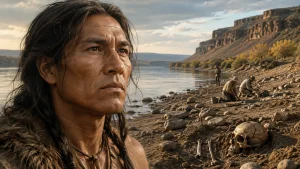
The Native Village Buried By A Mudslide For 500 Years — And The 55,000 Artifacts Found Preserved Beneath The Mud
The artifacts recovered from Ozette would provide the most detailed material evidence ever recovered of exactly how the Makah whaling tradition worked in the centuries before sustained contact with the outside world.
A Catastrophe Preserved in Community Memory
The Makah Tribe knew about the great slide before any archaeologist arrived at Cape Alava with a trowel.
Their oral history had preserved the memory of a catastrophic event that had buried part of the village.
This was not a vague or generalized cultural account.
It was specific enough to carry information about the nature of the event, the location, and the fact that structures and their contents had been covered by the slide.
Oral history is too often mischaracterized, in popular treatments of archaeology, as a kind of preliminary guess that science later corrects or validates.