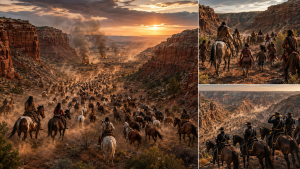
The Native Woman Who Became A Chief — The Forgotten Story Of Woman Chief, The Warrior Who Led The Crow
She arrived at the council of warriors not as a visitor, not as a supplicant, and not as a novelty.
She arrived as a chief.
Her name in the Crow language was Bíawacheeitchish.
The literal translation is Female Chief, or Woman Chief — a title that embedded her achievement directly into her identity.
Among a people who understood leadership as something earned through demonstrated courage, accumulated war honors, and the loyalty of followers, she had earned all of it.
She held the third-highest rank in a band of one hundred and sixty lodges.
She owned four wives who managed her household.
She owned large herds of horses.
She had led war parties against enemies and come back with scalps, with captured horses, and with the kind of reputation that spreads across the plains through the songs warriors sing about exceptional people.
She was the only woman in the recorded history of the Crow Nation to hold the rank of chief.
The man who knew her best among outsiders was Edwin Thompson Denig, a fur trader at Fort Union who spent roughly twelve years in direct contact with the upper Missouri tribes and who wrote about Crow life with more precision and less romanticism than most of his contemporaries.
Denig did not have a habit of exaggeration.
He wrote about Woman Chief that her war record was so distinguished it had elevated her to “a point of honor and respect not often reached by male warriors, certainly never before conferred upon a female of the Crow Nation.”
That is not a legend.
That is a primary source, written by someone who knew her personally, who had observed the Crow for over a decade, and who was measuring her achievement against every other warrior he had ever seen.
And yet her name is known to almost no one.
The question is not whether she existed or whether her achievement was real.
The question is why the world forgot her.