The One Who Hadn’t Stopped Looking
When a child says something that contradicts what the adults have decided is true, we assume the child is confused, or imagining, or too young to understand, and we correct them, gently, back toward the adult consensus.
It is one of the quiet cruelties of childhood, this constant, well-meaning invalidation, and most of us do it without a second thought, because we genuinely believe that adults know better.
But children are not, in fact, worse observers than adults.
In many ways they are better ones, precisely because they have not yet learned what they are supposed to see, precisely because they have not yet absorbed the narratives and protocols and social certainties that tell grown-ups when to stop looking.
A child looks at what is actually in front of them, with fresh and undirected attention, while an adult looks at what they expect to be there.
And so a child will sometimes see the thing that is genuinely present but that no adult expects, the thing that does not fit the accepted story, because the child does not yet know that the story exists.
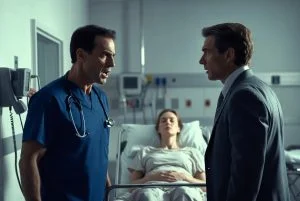
That night, every adult in the room was looking at a death.
My daughter was looking at her father.
And because I had spent eight years learning that Chloe saw things, real things, things worth taking seriously, I did the one thing that saved my husband’s life.
When she told me he was not dead, I did not correct her back toward the adult certainty.
I let her correct me.
Chapter 2 — The Warning
To understand why I believed my daughter so quickly, you have to understand the two days before, and the thing my husband said that had been ringing in my head all through that endless wake.
My husband, Mark, was thirty-nine years old, and he was, by every measure, completely healthy.