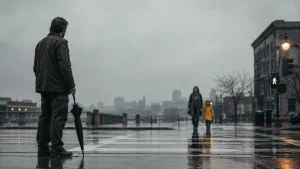
The Quietest Voices
So I lay there and I drowned the alarm going off in every cell of my body, and I kept my breath slow and my face slack and my heart, somehow, steady, while the woman I had loved planned my murder a whisper away.
It was not passivity.
People mistake stillness for passivity, for weakness, for the absence of action, and it is the opposite.
It was the most active thing I have ever done, a continuous, exhausting, moment-by-moment act of will, holding my own terror and rage down beneath a surface of perfect calm, because the surface was the only thing keeping me alive.
I had spent my life being a man of action, of decisive movement, of visible power.
And in the most dangerous moment of my life, everything depended on my capacity to do nothing at all, convincingly, while every instinct screamed at me to act.
I learned, in that bed, that there is a kind of strength that looks exactly like helplessness, and that it is often the only strength that will save you, and that the discipline to be still when your whole being demands motion is rarer and harder than any act of force.
My enemies thought I was helpless.
I was, in fact, working harder than any of them, at the single task of appearing not to be working at all.
Chapter 2 — Five Nights Earlier
To understand how I came to be lying in that bed, hearing my own death planned, I have to go back five nights, to the crash.
My car had gone off the road on the FDR Drive, at speed, because someone had cut the brake line.
I will not describe the mechanics of it; it is enough to say it was deliberate, and professional, and meant to kill.
My driver, Nico, a good man who had worked for me for eleven years, died at the scene.