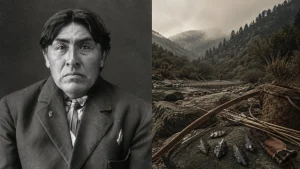
The Seneca Man Who Wrote The Surrender Terms At Appomattox – Then Became America’s First Native Commissioner Of Indian Affairs
He was not simply a Native soldier in the Union Army; he was a Native officer on the commanding general’s personal staff, present at the war’s formal conclusion.
His position was exceptional within the broader pattern of Native Civil War service, as it was exceptional in most other respects of his biography.
The Boarding School Era He Did Not Live to See Fully
One of the more painful ironies of Parker’s legacy involves the federal Indian policy that developed in the years after his tenure as Commissioner — a policy that, in certain respects, represented the opposite of everything his life had demonstrated was possible.
The Indian boarding school system, which developed in the 1870s and accelerated through the 1880s and 1890s, operated on the premise that Native children needed to be removed from their communities and their families in order to be “civilized” — that Native identity itself was the obstacle to Native people’s participation in American life, and that the solution was to destroy that identity through systematic education aimed at replacing Native languages, cultural practices, and community ties with English-language, Christian, American-identified replacements.