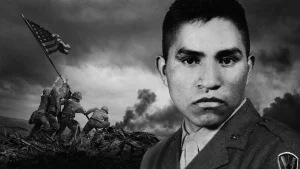
The Story Of Joe Medicine Crow, The Native American Soldier Who Stole Horses From The Nazis And Came Home A War Chief
He also resisted the romantic idea that winning a battle meant winning the larger struggle.
The Lakota and Northern Cheyenne forces defeated Custer’s immediate command at the Little Bighorn.
Yet the United States responded with intensified military pressure.
Within a short period, the broader resistance was overwhelmed, Native communities were forced onto reservations, buffalo herds were collapsing, and federal policy increasingly attacked Indigenous political and cultural autonomy.
Medicine Crow’s observation that no one truly wins war came partly from this historical perspective.
A spectacular victory could coexist with catastrophic long-term loss.
He understood this because the battle was not entertainment to him.
It was part of his family’s memory.
His historical work helped complicate the national story of the Little Bighorn and gave generations of visitors a Crow perspective on an event usually told through the lens of the Seventh Cavalry.
He wrote and lectured, participated in public history, advised museums and educational institutions, and contributed to interpretations of the battlefield.