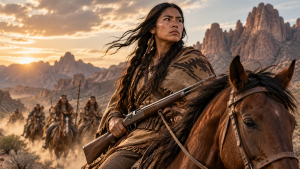
The Texas Canyon Battle Where U.S. Cavalry Captured 1,400 Native Horses — Then Destroyed About 1,000 Of Them
The hides were worth roughly $3 each at the tanneries, and the transportation infrastructure of the expanding railroad network made it economically practical to ship hides eastward in large volumes.
The result was a systematic elimination of the Southern Plains bison.
The southern herd — the animals that ranged through Texas, Indian Territory, Kansas, and eastern New Mexico — was essentially destroyed as a commercial population within a few years in the mid-1870s.
By 1875, the commercial hide hunters were already having difficulty finding enough animals to maintain profitable operations in much of the territory where they had previously operated.
The consequence for the Southern Plains peoples was that the primary mechanism for rebuilding wealth after the Palo Duro disaster — buffalo hunting — was being simultaneously eliminated.